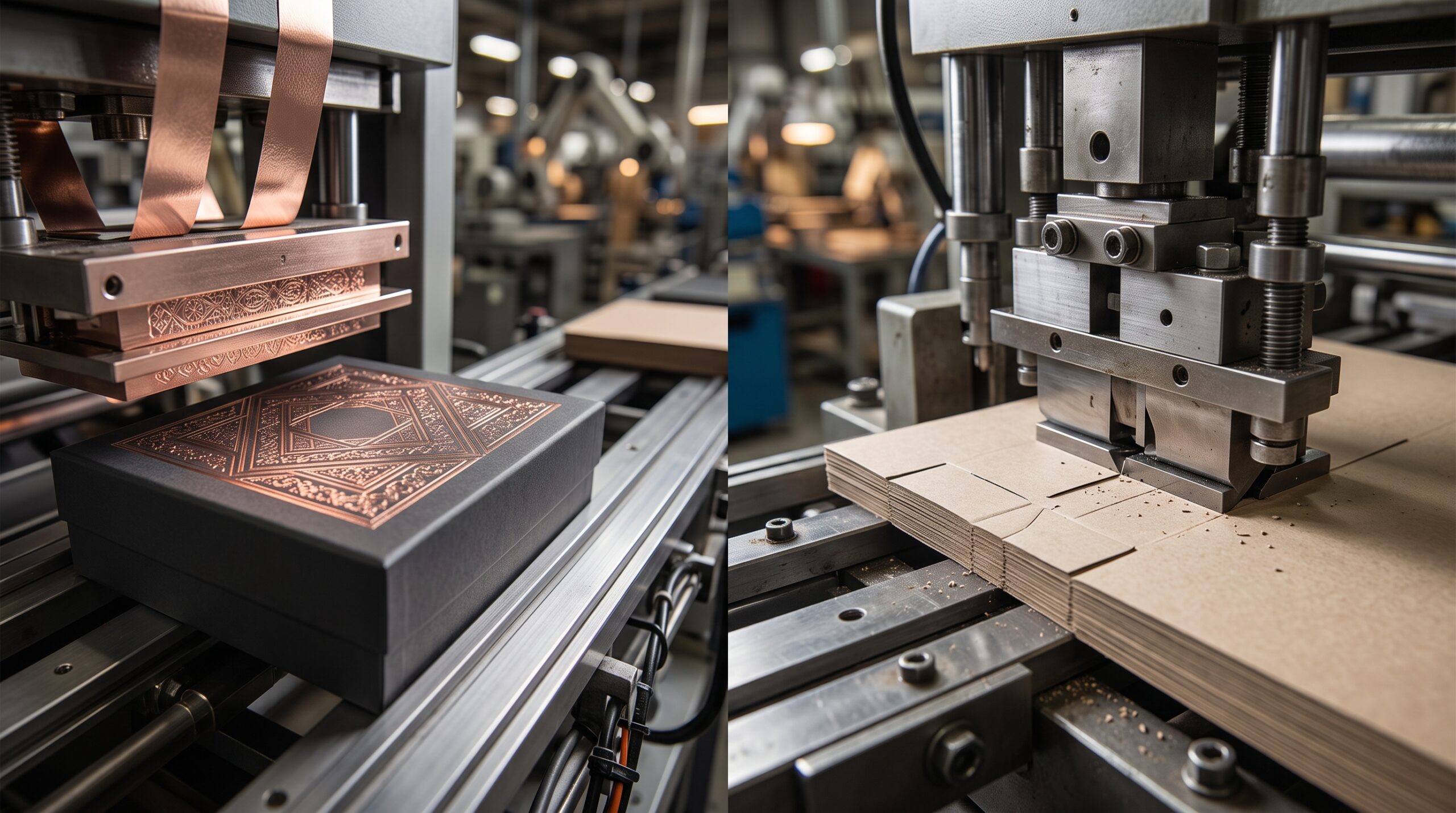
Why BORI Handles Finishing and Die-Cutting In-House for Better Packaging Quality
Why Finishing and Die-Cutting Matter in Custom Packaging
Imagine ordering custom packaging for your brand. You approve the design, check the colors and expect every box to look perfect. But when the order arrives, some boxes have scratched surfaces, uneven lamination or lids that do not fit properly.
What went wrong?
Sometimes, the problem happens after printing. Finishing and die-cutting are two important production stages that affect the appearance, shape and usability of custom packaging.
At BORI Garment Accessories Co., Ltd. in Ashulia, Savar, Bangladesh, we handle finishing and die-cutting in-house as part of our packaging production process. Keeping these stages under our own production team helps us maintain better control over quality, timing and consistency.
In this guide, you will learn how these processes work, why they matter and how in-house production can benefit your business.
What Is In-House Finishing in Packaging?
In-house finishing means completing the finishing process inside the same factory instead of sending printed materials to an outside workshop.
Finishing improves the appearance, texture and, depending on the treatment, surface protection of printed packaging.
Common packaging finishing options include:
- Gloss lamination: Creates a shiny surface that makes colors stand out.
- Matte lamination: Gives packaging a smooth, understated and premium appearance.
- Spot UV: Adds a glossy effect to selected areas, such as a logo or product name.
- Foil stamping: Adds a metallic effect to selected design elements.
- Embossing and debossing: Creates raised or recessed details on the packaging surface.
The right finishing method depends on your design, material, budget and brand identity.
For fashion, footwear, accessories and gift brands, finishing can help packaging look more professional and support a consistent brand image.
Why Outsourced Finishing Can Create Problems
Some packaging manufacturers send printed sheets to separate facilities for finishing. This arrangement can work, but it also introduces additional handling and coordination.
Here are some common challenges.
1. Surface Damage During Handling
Printed sheets may be scratched, bent or marked while being transported, stacked or handled between facilities. This is especially important when packaging has dark colors, delicate finishes or large printed areas.
2. Longer Production Times
When finishing depends on an outside supplier, your order may need to wait for transport, scheduling and production availability. These extra steps can make delivery planning more difficult.
3. Inconsistent Quality
Different workshops may use different equipment, working methods or inspection standards. As a result, the finish may vary between production batches.
4. Communication Problems
When printing and finishing are handled by separate companies, resolving a quality issue can take extra time. Each party may need to investigate its part of the process before a solution is agreed upon.
5. Limited Flexibility
If a finishing detail needs adjustment, coordinating with an external supplier may slow down the response.
These challenges explain why production control is important when ordering custom packaging.
How In-House Finishing Benefits Your Business
At BORI, keeping finishing within our production process helps our team coordinate the work more closely.
Better Quality Control
When printing and finishing are managed within the same factory, the production team can identify surface defects and finishing issues before the materials move to the next stage.
This helps reduce avoidable mistakes and supports more consistent packaging quality.
More Efficient Production
In-house finishing reduces the need to transport printed sheets to another workshop. It also removes the need to coordinate with a separate finishing supplier.
This can help simplify production scheduling and reduce unnecessary delays.
Clearer Accountability
Working with one factory for connected production stages makes communication easier. You have a clearer point of contact when discussing specifications, quality concerns or order changes.
More Consistent Results
Repeat orders are important for growing brands. Your packaging should maintain a similar appearance, finish and overall presentation across different production runs.
A coordinated in-house process helps the team follow the approved specifications more consistently.
Greater Production Flexibility
When finishing and other production stages work closely together, the team can identify issues and discuss adjustments more efficiently.
For your business, this means fewer unnecessary complications throughout the packaging process.
What Is Die-Cutting in Packaging?
Die-cutting is the process of cutting printed packaging material into a specific shape using a specially prepared cutting die.
It also creates crease lines that help the material fold into the correct box or tag structure.
Die-cutting is used to produce many packaging products, including:
- Custom paper boxes
- Shoe boxes
- Gift boxes
- Toy boxes
- Corrugated packaging
- Hangtags and printed labels
- Boxes with custom windows or shaped openings
Without accurate die-cutting, even a well-designed and beautifully printed package may not assemble correctly.
How the Die-Cutting Process Works at a Packaging Factory
Die-cutting involves several important steps. Each one helps prepare the material for the next stage of production.
Step 1: Preparing the Cutting Die
The cutting die is prepared according to the approved packaging design. It includes the required cutting lines, crease lines and special features, such as windows or hang holes.
The die must match the intended size and structure of the packaging.
Step 2: Setting Up and Testing
The die is positioned in the cutting equipment. Test cuts help the production team check alignment, dimensions and the relationship between the printed artwork and the cutting lines.
This stage is important because even a small alignment error can affect the finished appearance.
Step 3: Cutting and Creasing
The printed and finished sheets pass through the die-cutting process. The die cuts the material to the required shape and creates crease lines for folding.
Accurate cutting and creasing help the box take its intended form during assembly.
Step 4: Removing Waste and Checking Samples
Unwanted material is removed from the cut sheets. Samples can then be checked for clean edges, correct dimensions, crease quality and alignment.
Any issue identified at this stage can be reviewed before the materials proceed further.
Step 5: Moving to Assembly
After inspection, the cut pieces move to the next production stages, which may include folding, gluing, hand work and final assembly.
Properly prepared pieces make it easier to assemble packaging neatly and consistently.
Why Accurate Die-Cutting Makes a Difference
Die-cutting affects more than the shape of a box. It also influences how the package folds, closes and presents your brand.
Poor die-cutting can lead to several problems:
- Uneven printed borders or misaligned artwork
- Cracked or damaged surfaces along fold lines
- Lids that are too tight or too loose
- Boxes that are difficult to fold or assemble
- Incorrect dimensions or poorly fitting components
- Extra waste, rework and production costs
For premium packaging, these details matter. A box should not only look attractive; it should also function properly.
At BORI, keeping die-cutting connected to subsequent hand work and inspection helps the team identify problems before the packaging reaches the final packing stage.
Why Finishing and Die-Cutting Work Better Together
Finishing and die-cutting are closely connected.
For example, laminated paper may behave differently during folding and cutting than unlaminated paper. Some printed or coated surfaces may also be more sensitive to cracking, scratching or marking.
When the finishing and die-cutting teams coordinate their work, they can consider these material characteristics before the job moves forward.
This coordination helps the team pay attention to:
- The selected paper or board
- The type of lamination or surface treatment
- Cutting and crease-line accuracy
- The position of printed artwork
- Folding and assembly requirements
- The final appearance of the packaging
The goal is simple: create packaging that looks right, folds properly and meets the approved specifications.
What In-House Production Means for Your Brand
Choosing a packaging supplier involves more than comparing prices. You also need to consider production reliability, communication and the quality of the finished product.
Here is how coordinated finishing and die-cutting can support your business.
Fewer avoidable defects: Earlier checks can help identify problems before they affect more materials.
Better delivery planning: Fewer external production handoffs can make scheduling easier, although actual lead times depend on order size, materials and production requirements.
Consistent brand presentation: Following approved specifications helps maintain a uniform appearance across repeat orders.
Simpler communication: One production partner can coordinate related stages without requiring you to manage multiple workshops.
More reliable assembly: Accurate cutting and creasing help boxes and other packaging components take their intended shape.
For fashion labels, footwear companies, retailers and e-commerce brands, these benefits can make packaging production easier to manage.
Why Choose BORI for Custom Packaging in Bangladesh?
BORI Garment Accessories Co., Ltd. provides custom packaging and garment accessory solutions from its facility in Ashulia, Savar, Bangladesh.
Our production process brings key stages together, helping our team coordinate design, sampling, printing, finishing, die-cutting, hand work, inspection and shipping.
Our product range includes:
- Custom paper boxes
- Shoe boxes
- Gift boxes
- Corrugated boxes
- Toy boxes
- Hangtags
- Printed labels
Whether you need packaging for a new product launch or repeat orders for an established brand, the process starts with understanding your requirements.
Our team can discuss your preferred box structure, dimensions, materials, printing and finishing options to help develop a solution for your product.
We also offer a 100% refund under our stated satisfaction policy for printed products that do not meet your satisfaction. Please confirm the applicable terms and conditions with our team when requesting a quotation.
Frequently Asked Questions
What is the difference between finishing and die-cutting?
Finishing improves the surface appearance or characteristics of printed material through treatments such as lamination, spot UV or foil stamping. Die-cutting cuts the material into the required shape and creates crease lines for folding.
Why is in-house finishing important for packaging quality?
In-house finishing allows a factory to coordinate printing and finishing more closely, monitor quality within its own production process and reduce additional handling between facilities.
Does die-cutting affect the quality of a paper box?
Yes. Die-cutting affects the box’s dimensions, edges, fold lines and assembly. Accurate die-cutting helps the finished box maintain its intended shape and fit.
Can finishing and die-cutting affect delivery time?
Yes. These processes are part of the overall production schedule. Handling them within one factory can reduce transport and external scheduling requirements, but delivery time still depends on the order’s complexity, materials and quantity.
Which products require die-cutting?
Many packaging products use die-cutting, including paper boxes, shoe boxes, gift boxes, toy boxes, hangtags and some printed labels. The exact process depends on the product’s design and material.
Where is BORI located?
BORI Garment Accessories Co., Ltd. is located in Ashulia, Savar, Bangladesh. Contact the company directly for product information, quotations and order requirements.
Get Custom Packaging Support from BORI
Your packaging should reflect the quality of your product. Finishing creates the look and feel, while accurate die-cutting helps the package fit and function as intended.
By coordinating these stages in-house, BORI aims to support better production control, consistent packaging quality and smoother order management.
If you need custom boxes, hangtags or printed labels for your brand, contact our team to discuss your requirements.
Website: https://www.boribd.com/
Phone: +88 01981 161462 | +88 01813 996688
Email: bori03@boribd.com
BORI — Your packaging starts with us, and stays with us.