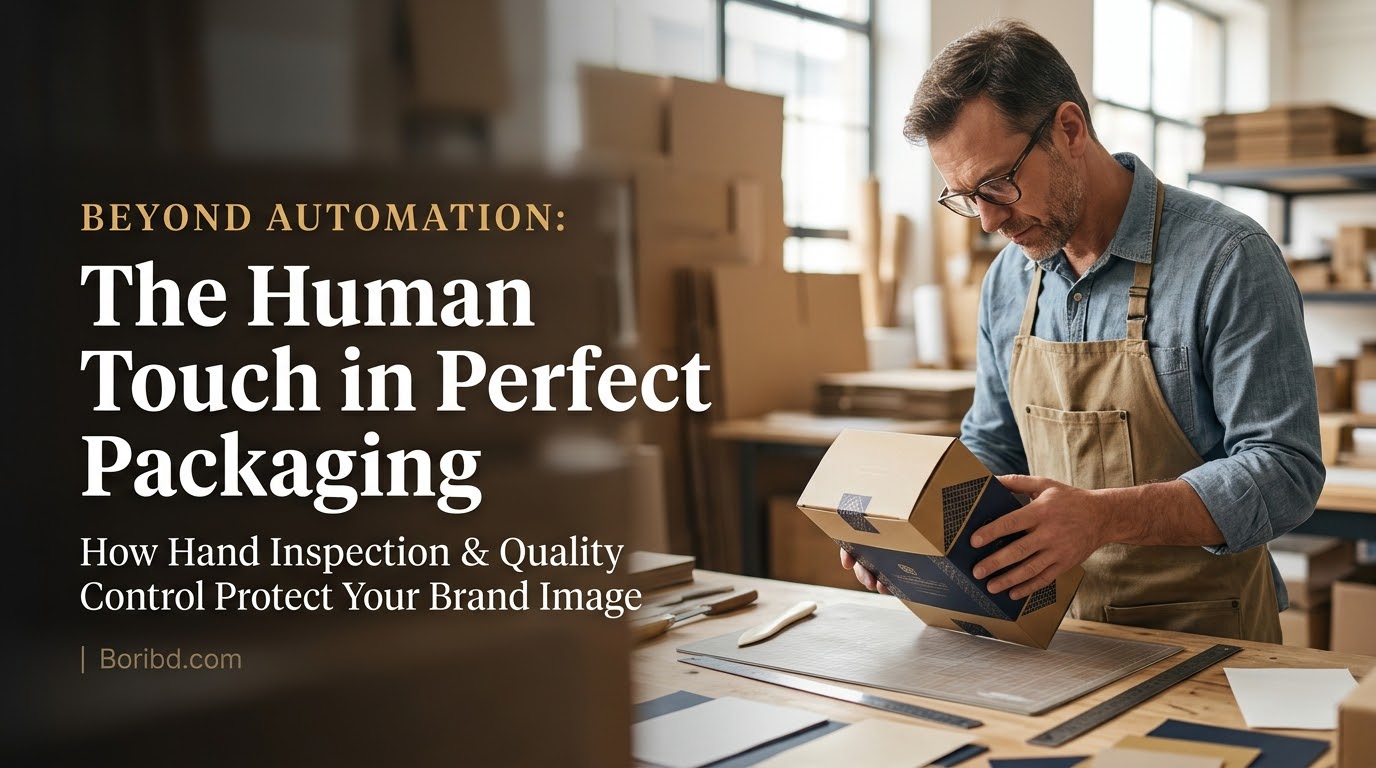
Inside the Hand Work Stage: Where Good Packaging Becomes Great Packaging
A box can look perfect on a screen and still disappoint when it reaches your customer. A crooked fold, a loose corner, uneven glue or a poorly fitted insert can change how the entire product feels.
That is why the work does not stop when the printing machines finish.
At BORI, a packaging manufacturer in Ashulia, Savar, Bangladesh, the hand work stage plays an important role in turning printed and die-cut materials into finished packaging. Skilled workers fold, glue, assemble and check packaging details that machines alone may not handle.
For brands that care about presentation, consistency and customer experience, this stage matters more than it might seem.
What Is the Hand Work Stage in Packaging?
The hand work stage is the part of the packaging production process where workers manually assemble, finish and check packaging after printing and die-cutting.
Machines handle much of the cutting, creasing and printing. Workers then take care of details such as folding, pasting, fitting inserts and assembling certain box styles.
The exact tasks depend on the packaging design.
For example, a simple paper box may need only folding and gluing. A premium gift box might require careful wrapping, insert placement, ribbon attachment or additional finishing work.
In simple terms, machines help create the shape, while skilled workers help make the packaging ready for use.
At BORI, hand work is an important part of producing packaging that looks presentable, fits together properly and meets the required specifications.
Why Can’t Machines Do Everything?
Packaging machines are essential for speed and consistency. They can print, cut and crease materials efficiently, especially when producing large quantities.
However, not every packaging design can be completed entirely by machine.
Some products require careful manual assembly. Others have small details that need a closer look before the packaging moves to the next stage.
Consider a rigid gift box with a wrapped exterior and a fitted insert. Even when the materials are cut accurately, the finished box still needs careful assembly to achieve the intended appearance.
During hand work, trained workers can identify visible problems such as:
- Uneven folds or poorly aligned edges.
- Glue marks in visible areas.
- Loose corners or weak joints.
- Inserts that do not sit correctly.
- Wrapping that needs adjustment.
- Assembly defects that affect the final appearance.
Identifying these issues during production helps the team address them before the packaging is packed and shipped.
The goal is not to replace machines with manual work. It is to combine efficient machinery with skilled handling where human attention adds value.
What Happens During the Hand Work Stage?
The hand work process varies according to the box structure, materials, quantity and finishing requirements. However, several common activities help turn individual packaging components into finished products.
1. Sorting and Checking Materials
Before assembly begins, workers sort the printed and die-cut pieces.
They check for visible damage, missing pieces and obvious production defects. This helps prevent unsuitable materials from moving further into the process.
Early checks also make it easier to identify problems before more time and materials are invested in assembly.
2. Folding and Adjusting Edges
After die-cutting and creasing, some packaging components need careful folding and adjustment.
Workers fold along the intended crease lines and check whether the pieces align correctly. The aim is to achieve a neat shape, clean edges and a box that comes together as intended.
Accurate folding is particularly important for boxes with multiple panels, fitted lids or more detailed structures.
3. Gluing and Pasting
Glue holds many packaging components together, but its placement matters.
Workers apply adhesive to the required areas, such as joining flaps, corners and other specified parts. Depending on the design, this may also include attaching window patches or securing other components.
Too little adhesive can weaken a joint. Poor placement or excess glue can affect the appearance of the finished box.
Careful application helps support both structural integrity and a clean finish.
4. Adding Inserts and Other Details
Some packaging needs more than an outer box.
Depending on the design, the hand work stage may include fitting dividers, product inserts, handles, ribbons, magnets or other components.
These details help keep products in place and contribute to the overall presentation.
For example, a gift box may need a fitted insert to hold an item securely, while a premium retail box may include a ribbon or specially designed interior.
Each component needs to be placed correctly to achieve the intended result.
5. Checking the Finished Assembly
Once the box is assembled, it needs to be checked.
Workers look for visible defects, alignment problems, glue marks and other issues that could affect the packaging’s appearance or usability.
Depending on the product specifications, checks may also include the fit of the lid, the position of inserts and whether the assembled box holds its intended shape.
At BORI, this work forms part of the broader quality-checking process. Hand assembly and inspection help identify problems, while the required quality checks determine whether the packaging is ready for the next stage.
6. Bundling and Preparing for Packing
After the required checks, approved packaging is arranged and prepared for packing.
Boxes must be handled carefully to reduce the risk of crushing, surface marks or other damage before shipment.
Proper handling at this stage helps protect the finished packaging so it can reach the customer in the intended condition.
Why Does Hand Work Matter for Your Brand?
Your packaging does more than hold a product. It also influences how customers perceive the item inside.
A well-assembled box with clean edges and a neat finish can support a premium brand image. Visible glue, uneven folds or poorly fitted components can have the opposite effect.
Here are three reasons the hand work stage matters to packaging buyers.
1. It Helps Protect Your Brand’s First Impression
Customers notice details, even when they cannot explain exactly what feels right or wrong.
A lid that fits properly, a neat exterior and a correctly positioned insert can make packaging feel carefully made.
For fashion, footwear, cosmetics, accessories and gift products, these details can support the experience a brand wants to create.
2. It Helps Reduce Avoidable Defects
Finding an assembly problem before shipment is generally easier than dealing with it after delivery.
A defect discovered during production may be corrected before the order is completed. If the same issue reaches the customer, it could lead to complaints, returns, replacement costs or delays.
Hand work does not eliminate every possible defect, but careful handling and timely inspection can help reduce avoidable problems.
3. It Supports Consistency Across Large Orders
Producing a sample that looks good is one challenge. Maintaining the required standard across a large production run is another.
Clear assembly instructions, consistent working methods and regular quality checks help teams maintain the expected result across multiple boxes.
For businesses ordering packaging in bulk, consistency matters because customers expect the same presentation every time they receive the product.
Which Types of Packaging Need Hand Work?
The amount of manual work depends on the design and construction of the packaging.
Some products need only a few assembly steps. Others require several stages of careful handling.
Common examples include:
Rigid boxes: These may require wrapping, corner finishing, lid assembly and careful placement of interior components.
Gift boxes: Ribbons, decorative elements, inserts and special structures can require manual assembly.
Custom paper boxes: Folding, gluing and checking are important for achieving the intended shape and fit.
Shoe boxes: Proper folding, assembly and checking help the finished box maintain its intended structure.
Boxes with handles or inserts: Additional components must be positioned and secured according to the design.
Premium retail packaging: Special materials and decorative details may require extra care during assembly and finishing.
The best process depends on the product, the packaging specifications and the finish the buyer expects.
How Does BORI Maintain Packaging Quality?
Good packaging depends on more than the final inspection. Quality needs attention throughout production.
At BORI, our packaging production process brings design and sampling together with printing, finishing, die-cutting, hand work and inspection.
This approach helps the team consider how a design will move from an initial concept to a finished product.
Three practices are especially important.
Clear specifications: Box dimensions, materials, structure and finishing requirements need to be understood before production begins.
Checks during production: Identifying problems as work progresses can help prevent avoidable defects from continuing through the process.
Careful final inspection: Finished packaging needs to be checked against the applicable requirements before it is prepared for shipment.
The objective is straightforward: packaging should match the approved design as closely as possible and meet the agreed quality requirements.
For buyers, discussing these requirements before placing an order is one of the best ways to establish clear expectations with a packaging manufacturer.
Frequently Asked Questions About Hand Work in Packaging
What is hand work in a packaging factory?
Hand work is the stage where workers manually perform tasks such as folding, gluing, assembling, fitting inserts and checking finished packaging. It usually follows printing and die-cutting, although the exact sequence depends on the production process.
Is hand work slower than machine production?
Manual assembly generally takes longer per unit than fully automated operations. However, some packaging designs require manual handling to achieve the desired finish. The most efficient approach depends on the box structure, production quantity and level of detail.
Does hand work increase packaging costs?
It can increase labour costs, depending on the design and amount of manual assembly required. However, appropriate handling and inspection may help reduce waste, rework and avoidable defects. The overall cost depends on the packaging specifications and production requirements.
Which packaging products require the most hand work?
Rigid boxes, premium gift boxes, boxes with inserts, and designs featuring ribbons, handles or other decorative components may require more manual assembly. The actual workload depends on the product’s construction and finishing requirements.
Why is manual inspection important in packaging?
Manual inspection can help identify visible issues such as uneven folds, glue marks, misaligned components and assembly defects. These checks complement other quality-control measures and help determine whether packaging meets the required specifications.
What happens after the hand work stage?
After hand assembly, packaging undergoes the applicable quality checks and is prepared for packing and shipment. The exact sequence depends on the product and factory workflow.
Can I request a sample before placing a bulk packaging order?
Yes, you can contact BORI to discuss your packaging requirements and ask about design and sampling support. A sample can help you review the box structure, dimensions, materials and appearance before proceeding with bulk production.
The Final Touch That Makes a Difference
A packaging machine can print a design and cut a box with precision. But when a product needs careful folding, accurate assembly or detailed finishing, skilled hands still play an important role.
The hand work stage brings these details together. It helps turn individual components into packaging that is ready to hold, protect and present a product.
At BORI, we believe good packaging comes from combining the right production methods with careful attention to detail at every stage.
Planning your next custom packaging order?
Visit Boribd.com to explore our packaging solutions or contact our team to discuss your product, box design, materials and sampling requirements.
Let’s work together to create packaging that reflects the quality of your brand.